Embedded Thermal Condition Monitoring for AI Data Center Infrastructure Using Lepton 3.1R
Abstract
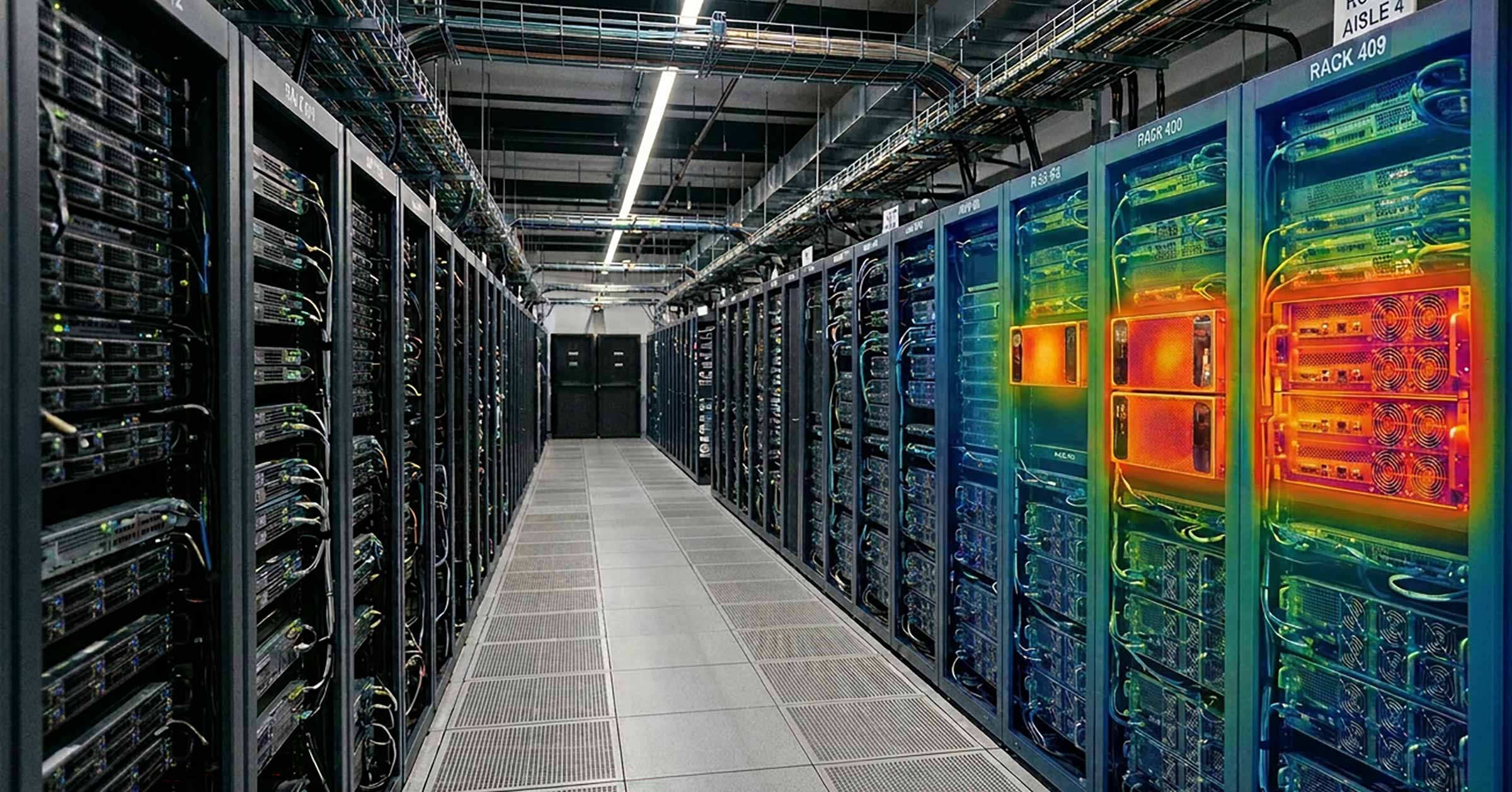
AI data centers are increasing rack power density and expanding the use of liquid cooling, creating new reliability challenges at electrical and thermal interfaces. Localized heating can develop at connectors, busbars, power distribution units (PDUs), and liquid-cooling connections before room- or rack-level sensors detect abnormal conditions.
This application note explains why embedded radiometric thermal sensing is well suited to condition monitoring and predictive maintenance in these environments, and how the NDAA-compliant Lepton 3.1R can be used as a compact, wide-field-of-view sensing solution for earlier warning and improved fault isolation in critical infrastructure.
Introduction
Thermal imaging has long been used as a maintenance tool in power generation and other critical infrastructure, but it has most often been applied as a periodic inspection method rather than as a continuous sensing layer. In AI data centers, that model is becoming less sufficient. Rack power density is rising, liquid cooling is expanding, and infrastructure operators face growing consequences when localized thermal issues develop into unplanned downtime or safety events. Industry reporting continues to identify power as the leading threat of data center outages, underscoring the value of earlier visibility into failure-prone electrical and thermal interfaces.
This application note focuses on why embedded radiometric thermal sensing is well suited to that need. Rather than restating the benefits of thermal monitoring in general, the discussion that follows examines where conventional sensing can miss emerging faults in high-density AI environments. This includes why electrical and liquid-cooling interfaces deserve closer observation, and how a compact thermal camera can be integrated into condition-monitoring architectures for earlier warning and better fault isolation.
Thermal and Electrical Monitoring Challenges in AI Data Centers
The shift to AI and accelerated computing is redefining the thermal design envelope of the data center. In high-density racks, including deployments that can exceed 100 kW, infrastructure must manage both greater heat rejection and higher current through conductors, joints, and terminations. Temperature rise in electrical distribution hardware depends not only on conductor resistance but also on joint quality and contact resistance. Even a small increase in resistance can produce disproportionate self-heating according to the relationship P = I2R. At high current, added resistance measured in micro-ohms can generate meaningful localized heat at a bolted joint, plug interface, or termination. That heat can further increase resistance through oxidation, relaxation, surface degradation, or loss of contact force, creating a positive feedback loop that accelerates temperature rise. Because this process can develop quickly, traditional route-based monitoring is limited in its ability to detect problems early.
As a result, a connector can remain electrically closed while developing an unsafe thermal signature. Common causes include insufficient torque, surface contamination, corrosion, fretting, plating wear, mechanical vibration, and repeated thermal cycling.
Similar interface sensitivity exists in liquid-cooled architectures. Direct-to-chip systems rely on cold plates, manifolds, hoses, seals, and quick disconnects to maintain flow, pressure, and thermal coupling. If a quick disconnect is partially engaged, sealing performance degrades, flow is restricted, or coolant quality causes fouling or corrosion. The first sign may be a localized temperature excursion near the affected interface rather than an immediate room-level alarm. Liquid cooling therefore introduces additional fault modes that are both thermally and mechanically coupled.
Traditional monitoring may be insufficient for detecting localized, interface-level faults. Supply-air, return-air, and average coolant measurements are low-spatial-resolution indicators that describe bulk thermal conditions rather than the state of each failure-prone interface. A rack’s temperature can appear normal at the macro level while a single connector, busbar joint, or quick disconnect is already operating above baseline. Effective condition monitoring therefore requires a sensor that can observe where faults originate and track thermal gradients, asymmetry, and drift over time.
Lepton 3.1R Solution Overview
Lepton 3.1R is a compact, radiometric, National Defense Authorization Act (NDAA)-compliant thermal camera module designed for embedded condition monitoring. For AI data centers, NDAA compliance supports trusted components and transparent supply chains in networked, mission-critical infrastructure. It can also help organizations reduce legal, financial, and operational risk while supporting procurement requirements in government and other regulated environments.
For rack-level applications, Lepton 3.1R combines wide-area coverage, quantitative temperature measurement, and low-power operation in a package small enough to place near electrical and liquid-cooling interfaces. Its SPI and I2C interfaces, integrated shutter, lens, and ASIC simplify integration into custom designs. NDAA compliance may also benefit original equipment manufacturers (OEMs) serving U.S. and European markets that prioritize trusted supply chains.
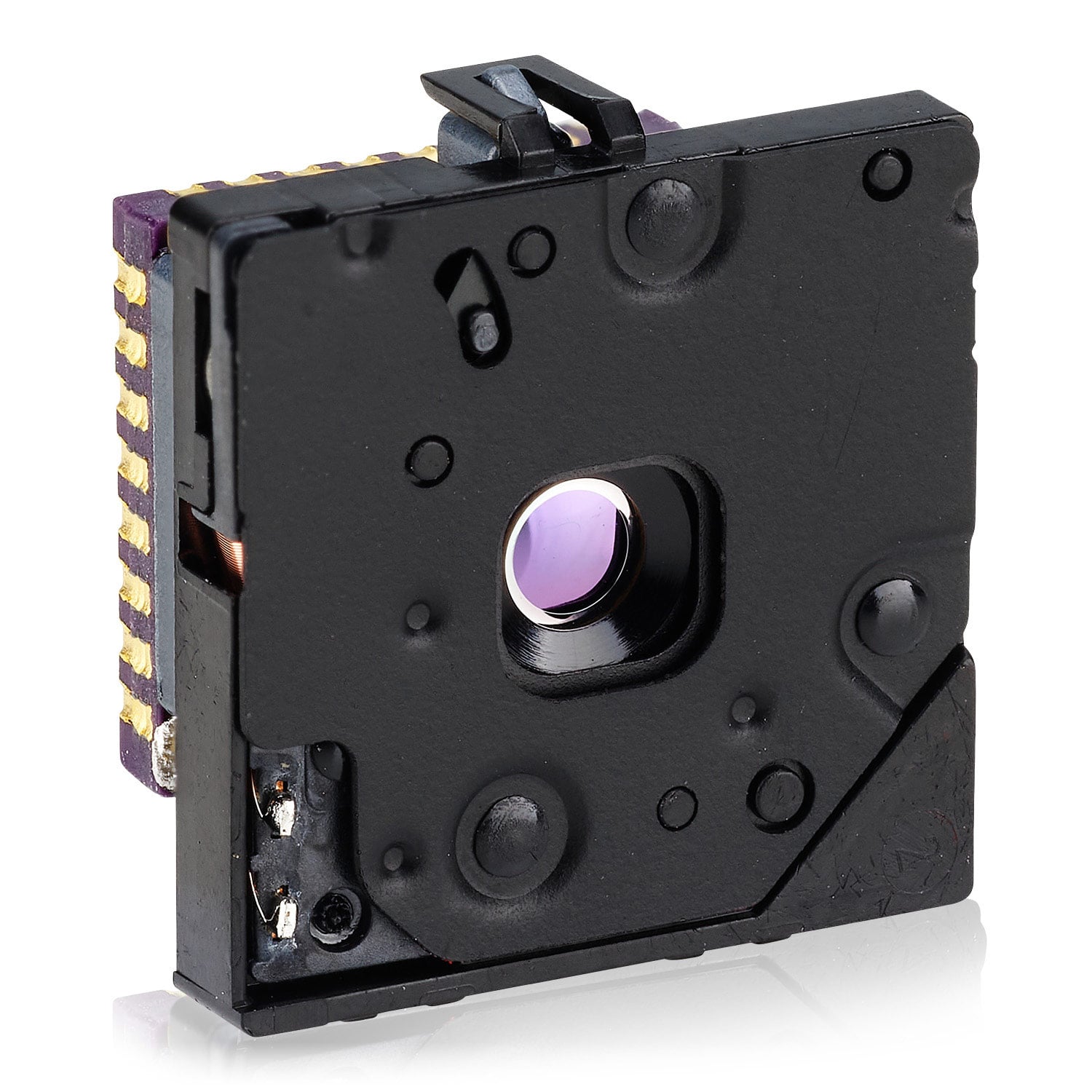
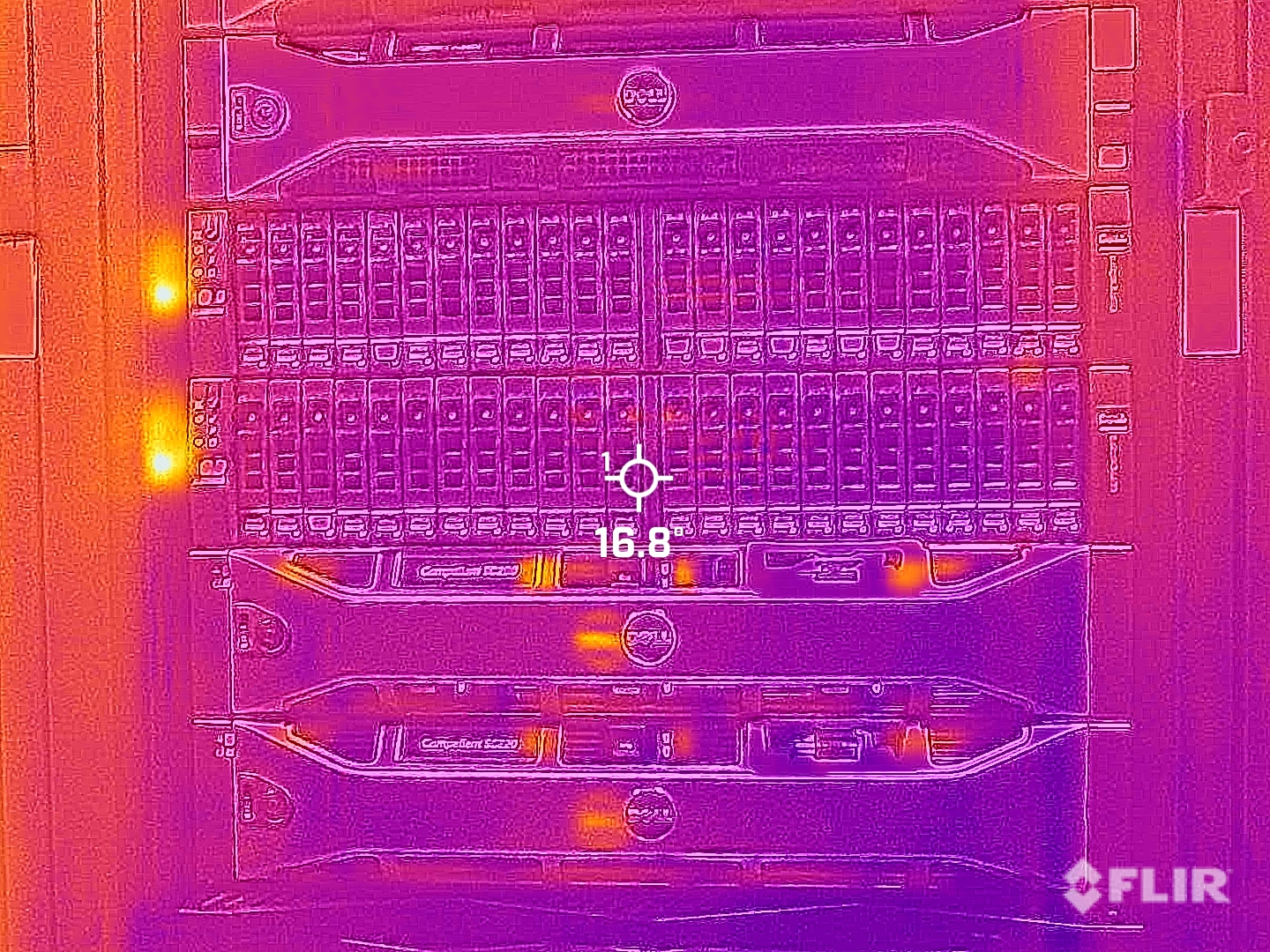
Figure 1. Lepton 3.1R radiometric thermal camera module (left) and radiometric thermal image featuring FLIR Multi-Spectral Dynamic Imaging (MSX)® (right)
A 95° horizontal field of view allows one module to capture multiple connectors, a PDU subassembly, a manifold branch, multiple racks, or a larger portion of a rear-door heat exchanger in one scene. This wider view can reduce camera count while improving comparison of adjacent components for asymmetry, unequal loading, and thermal outliers.
Radiometric output and imaging matter because the goal is not only temperature trending, but also visualization when a human operator is in the loop. Lepton 3.1R provides both a thermal image and per-pixel temperature data in real time, allowing software to define regions of interest around electrical joints, cable exits, quick disconnects, or manifold interfaces and trend them over time. This supports alarm logic based on absolute thresholds, rate of change, delta to baseline, delta to neighbor, or persistent thermal asymmetry. Compared with low-resolution thermopile arrays, which are commonly 8 x 8 pixels, the 160 x 120 microbolometer provides greater scene detail for identifying component-level hot spots and supporting AI-based analytics.
The module’s size, mass, and power profile also support embedded infrastructure deployment. Lepton 3.1R fits easily on the tip of a finger. It’s small enough to mount near monitored assets without materially affecting enclosure layout, airflow, or service access. Its low operating power supports distributed installation across a rack or subsystem for continuous monitoring of power entry, power distribution, and liquid-cooling interfaces. For OEMs, established Lepton mechanical, electrical, and software interfaces can help reduce development effort and integration risk.
Non-contact and embedded monitoring: Thermal imaging is useful where contact instrumentation is difficult, intrusive, or too sparse. Wired probes measure only its attachment point and may miss the hottest location if the gradient shifts. A non-contact radiometric imager can observe the full interface geometry, including adjacent insulation, housing, and surrounding structure, improving detection of spreading heat, non-uniformity, or leakage-related cooling loss.
Radiometric output and distributed intelligence: Because Lepton 3.1R outputs quantitative thermal data, it can feed condition-monitoring algorithms rather than simple image streams. Multiple modules positioned near bus structures, connector fields, power distribution units (PDUs), rear-door assemblies, and liquid-cooling junctions can create a thermal map of the rack that is more informative than room-level sensing alone.
Design Considerations
Effective implementation starts with sensor placement. The camera should have a clear line of sight to the interfaces most likely to exhibit early thermal deviation, including connector fields, busbar joints, breaker terminations, manifold branches, and quick disconnects. Placement should also account for obstructions, service access, cable movement, and the possibility that nearby structures may partially mask the hottest region.
A second consideration is thermal baseline. Absolute temperature thresholds are useful, but many failures begin as relative deviations from normal operating behavior. In many cases, it is better to characterize thermal behavior across representative load states, fan settings, coolant temperatures, and ambient conditions, then alarm on delta to baseline, delta to neighbor, rate of change, or persistence.
Surface properties also matter. Emissivity differences among painted metal, bare metal, plastics, insulation, and fluid fittings can affect apparent temperature distribution. Highly reflective surfaces may show reflected radiation from nearby hot components rather than their own true temperature, so regions of interest should be defined on repeatable surface features whenever possible.
Alarm strategy should be designed at the region level rather than the whole-image level. Regions of interest can be defined around electrical joints, cable exits, connector bodies, manifold interfaces, or other failure-prone features. Metrics such as maximum temperature, average temperature, spatial gradient, and temporal trend can then be evaluated per region.
Finally, the thermal sensor should be treated as part of a broader monitoring architecture. The most useful deployments correlate radiometric data with workload, power draw, fan speed, coolant temperature, flow status, and service history. This context improves fault isolation and reduces nuisance alarms.
Example Monitoring Points and Application Scenarios
The following examples illustrate how Lepton 3.1R can be used to observe common failure-prone interfaces in AI data center infrastructure and detect localized temperature deviations early enough to support investigation, maintenance, or protective action.
One important use case is power connector and PDU monitoring. As rack current rises, lugs, plug interfaces, breaker terminations, and internal distribution joints become more sensitive to torque loss, oxidation, contamination, and assembly variation. Thermal imaging can help detect the resulting temperature increase before electrical continuity is lost.
Busbar and backplane monitoring is another important application. High-current conductors can develop localized heating at joints, bends, transitions, laminated structures, or mechanically stressed regions. Imaging these areas directly helps identify unequal current sharing, thermal bottlenecks, and cooling limitations that may not be apparent from electrical telemetry alone.
Liquid-cooling connector and manifold monitoring are equally valuable. In direct-to-chip systems, quick disconnects, hoses, manifolds, and cold-plate interfaces must maintain proper engagement, seal integrity, and flow distribution. A partially restricted path, poor coupling, or early leakage condition can alter the local thermal signature before it produces a clear system alarm.
Lepton 3.1R also supports predictive maintenance and model-based alerting. Once a normal thermal baseline is established for each asset class and operating mode, software can classify deviations by magnitude, persistence, and rate of change. Beyond simply detecting a hot object, it detects meaningful departures from normal behavior early enough to plan intervention.
System-Level Monitoring Advantages
From a system architecture perspective, embedded thermal sensing complements rather than replaces existing environmental and electrical telemetry. Its value is continuous spatial observability at the interface level, where many high-current and liquid-cooling faults originate.
That advantage becomes clearer when compared with conventional instrumentation. Ambient probes, airflow sensors, and average coolant measurements characterize bulk conditions but do not observe the geometry of failure-prone interfaces. Contact sensors provide point data, but they do not scale well when multiple hot spots are possible. By contrast, a fixed radiometric thermal sensor provides continuous spatial data from the same viewpoint, making it possible to observe local gradients, compare adjacent components, and detect drift that sparse point sensors may miss.
Operationally, that added observability can improve fault isolation and reduce the chance that a latent interface problem progresses unnoticed. Earlier visibility into abnormal temperature rise can help operators inspect the specific connector, joint, or liquid-cooling interface that is deviating instead of relying on broader symptoms after the problem has propagated.
In that context, Lepton 3.1R offers a practical balance of thermal sensitivity, radiometric capability, field of view, integration simplicity, and system cost. Its combination of 160 x 120 radiometric imaging, broad 95° coverage, and compact low-power design supports quantitative thermal monitoring in space-constrained embedded applications. It enables designers to place sensing close to the failure mechanisms of interest and convert periodic thermal inspection into continuous, machine-observable data. Teledyne FLIR OEM’s manufacturing model also supports scalable deployment for higher-volume applications.
Design Summary
For AI data center designers, the central challenge is that the most consequential thermal events often begin locally while the broader system still appears normal. High rack power, higher current density, and greater use of direct liquid cooling all increase the need to monitor connectors, joints, terminations, manifolds, and quick disconnects directly rather than infer their condition from room-level measurements.
Lepton 3.1R provides a practical sensing element for that task. Its radiometric output, 95° field of view, 160 x 120 thermal pixel resolution, compact package, and low-power design support placement near critical interfaces and integration into broader control and condition-monitoring architectures. For OEMs and infrastructure designers, it provides actionable thermal data for earlier warning, improved fault isolation, and predictive maintenance in scalable deployments.