Study: Fused Thermal and Radar Automatic Pedestrian Detection and Braking
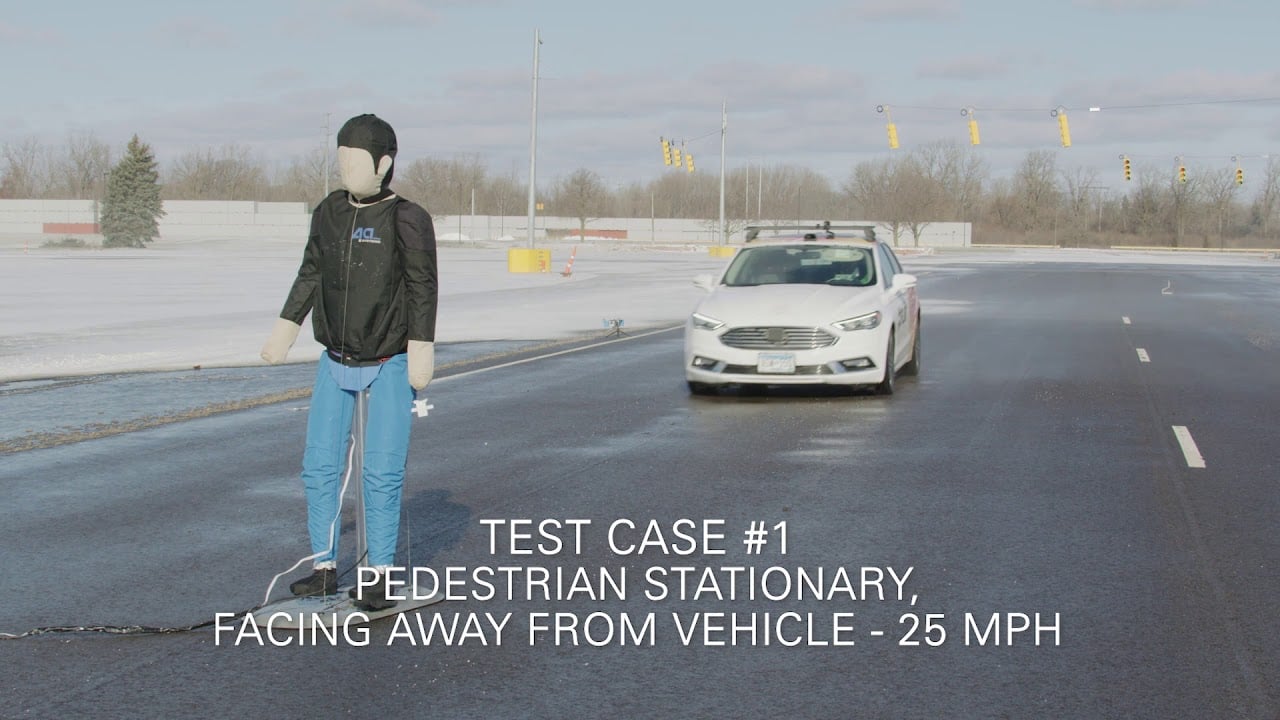
测试配备 FLIR 热像仪的自动紧急制动系统
使用欧洲新车评估计划 (NCAP) 成人行人目标物 (EPTa),在白天和黑暗环境下分别进行了三种场景测试,得到六个数据集,开展了总共 35 轮测试。测试结果令人鼓舞。在所有六种场景测试的全部测试轮次中,AEB 系统均在接触 EPTa 前成功将测试车辆 (VUT) 刹停。
According to the National Highway Traffic Safety Administration (NHTSA), in 2018, over 6,000 pedestrians’ lives were lost in the United States. A recent AAA study that measured pedestrian detection systems found that traditional automatic emergency braking (AEB) systems using radar and cameras don’t work effectively at night and are often challenged during daylight hours as well. As 20 automotive manufactures - representing 99% of the U.S. car market - look ahead to 2022 to meet their commitment of making AEB standard, the industry continues to develop and test new technologies.
FLIR Systems Inc. contracted VSI Labs to develop a proof-of-concept AEB system that fused perception data from a FLIR ADK’s ethernet-based Boson® thermal camera and a Delphi ESR 2.5 radar. The radar provided range data and the thermal camera provided object detection and classification. VSI recently conducted initial performance tests based on Euro NCAP requirements at the American Center for Mobility (ACM).
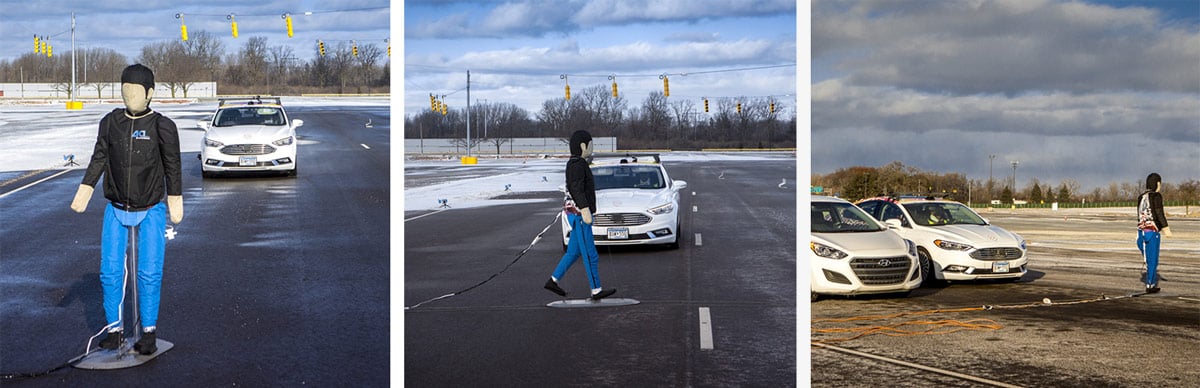
Three test cases were conducted in both daylight and darkness, giving six datasets and 35 total test runs using an adult Euro NCAP Pedestrian Target (EPTa). Test results were promising. In all runs for all six test cases, the AEB system successfully brought the VUT to a stop before reaching the EPTa.
For more details about the testing and the results, check out the executive summary that VSI wrote with FLIR Systems.
Additional testing is planned for spring/summer of 2020.