
Imagerie thermique VGA vs SXGA : Ce que signifie une résolution plus élevée pour la portée, l’optique et l’IA
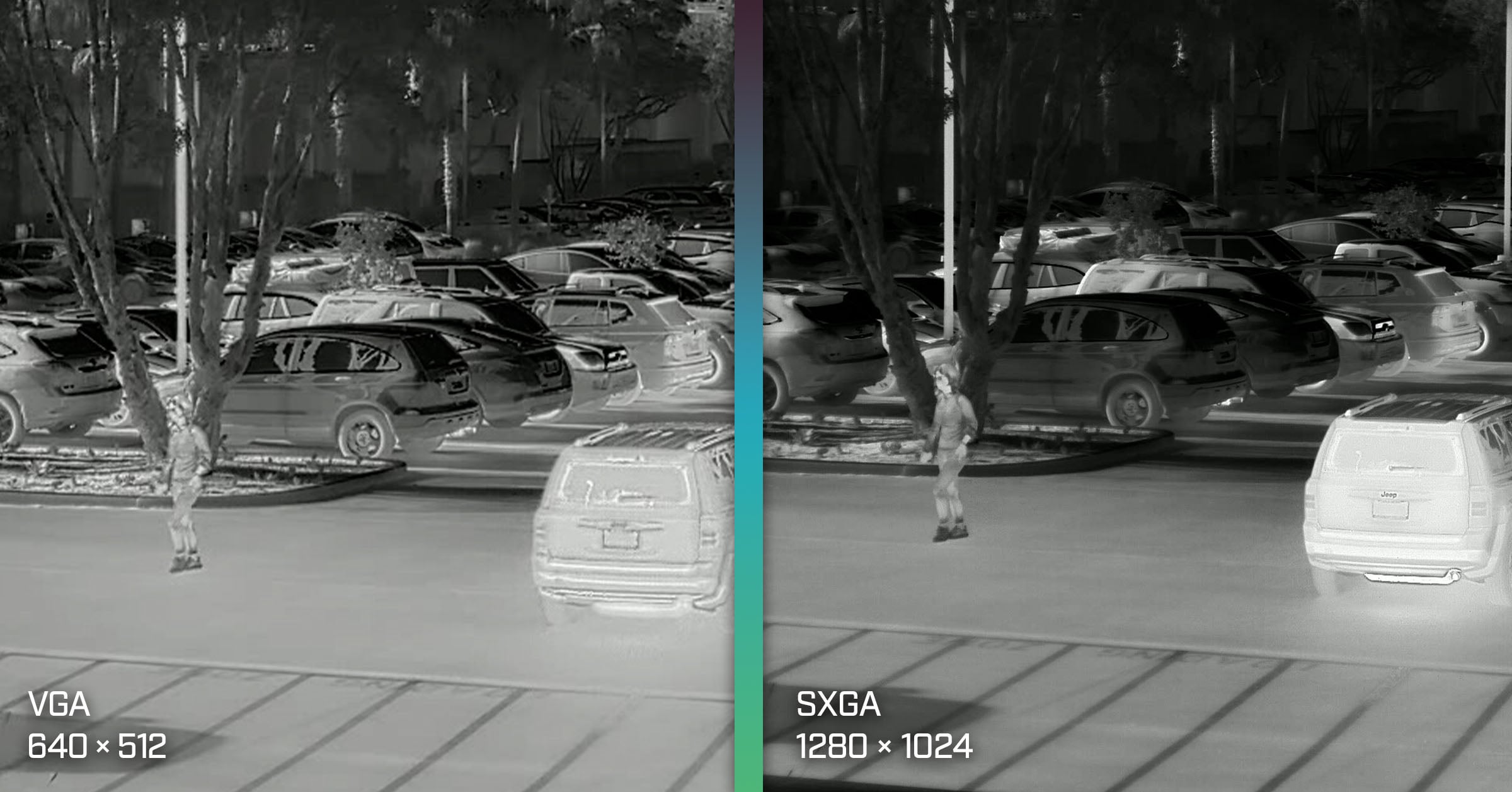
Résumé
Cet article examine les implications au niveau du système du passage de l’imagerie infrarouge à ondes longues (LWIR) vidéo (VGA, 640 × 512) à l’imagerie à matrice graphique super étendue (SXGA, 1 280 × 1 024) pour les applications de défense, autonomes et de détection intégrée. Il compare la façon dont une résolution de détecteur plus élevée affecte les pixels sur la cible, le champ de vision instantané (IFOV), les performances de détection, de reconnaissance et d’identification (DRI), les compromis sur le champ de vision, la conception optique, la charge de traitement et les performances de vision artificielle. L’objectif est de définir la résolution comme un élément d’un espace commercial d’ingénierie plus large qui comprend également la sensibilité, le débit optique, la bande passante, la latence, l’alimentation, la gestion thermique, les exigences d’approvisionnement, l’exportabilité et les besoins de performance spécifiques à la mission.
Introduction et arrière-plan
Depuis plus d'une décennie, les caméras thermiques à résolution VGA sont la norme pour de nombreuses applications de défense, industrielles et non équipées, car elles fournissent un équilibre efficace entre les performances, le coût du système et la taille, le poids et la puissance (SWaP). Alors que les exigences en matière d’autonomie, de vision artificielle et de détection à longue portée continuent de s’étendre, les architectes système évaluent les avantages du passage à des capteurs thermiques de haute résolution.
La transition de VGA à SXGA est bien plus qu’une simple amélioration de la qualité d’image. Avec quatre fois le nombre de pixels, les imageurs SXGA modifient fondamentalement la relation entre la résolution de la cible, le champ de vision, la conception optique et la perception de la machine. Les modules SXGA LWIR plus récents, tels que Boson® SX8 de Teledyne FLIR OEM, illustrent comment les architectures de détecteurs de 8 microns (μ m) peuvent augmenter la résolution tout en limitant les pénalités de taille et d’optique traditionnellement associées aux capteurs thermiques de plus grand format. Ces compromis sont particulièrement importants pour les systèmes militaires et aérospatiaux où les performances des capteurs doivent être équilibrées par rapport à la taille de la charge utile, au traitement embarqué, à la capacité de liaison de données, à l’exportabilité et aux exigences d’approvisionnement conformément aux réglementations sur le trafic international d’armes (International Traffic in Arms Regulations, ITAR) et à la loi sur l’autorisation de défense nationale (National Defense Authorization Act, NDAA). Boson®+ fournit un point de référence VGA utile pour comparer la manière dont la résolution, le pas de pixel, le champ de vision, les contraintes d’intégration au niveau du système et les exigences du programme affectent les performances du monde réel.
 |
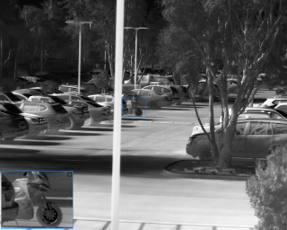 |
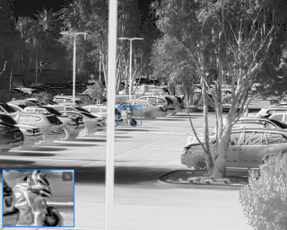
Figure 1. Exemple de champ de vision horizontal VGA 18° (gauche) vs SXGA (droite) avec zoom 3× image dans image
Comprendre la différence de résolution
La différence la plus évidente entre VGA et SXGA est le nombre de pixels. Un capteur SXGA capture quatre fois plus d’échantillons thermiques par image qu’un capteur VGA. Ces pixels supplémentaires peuvent être utilisés de deux façons : augmenter les détails de la cible dans le même champ de vision ou augmenter le champ de vision tout en conservant les détails de la cible. La plupart des systèmes réels utilisent une combinaison des deux.
Tableau 1. Comparaison des résolutions VGA et SXGA
| Paramètre | VGA | SXGA |
|---|---|---|
| Résolution (horizontale × verticale) | 640 × 512 | 1 280 × 1 024 |
| Nombre total de pixels | 327 680 | 1 310 720 |
| Nombre de pixels relatifs | 1× | 4× |
L’importance d’une résolution plus élevée n’est pas simplement que l’image semble plus nette. Les échantillons thermiques supplémentaires fournissent plus d’informations aux opérateurs humains, aux traceurs de cibles, aux systèmes autonomes et aux algorithmes d’apprentissage automatique.
Pixels sur la cible et les performances DRI
La détection, la reconnaissance et l’identification (DRI) décrivent des niveaux croissants de performance des tâches dans un système d’imagerie. La détection signifie déterminer qu’un objet est présent ; la reconnaissance signifie classer le type d’objet, tel qu’une personne, un véhicule ou un drone ; et l’identification signifie distinguer l’objet, la configuration ou la menace spécifique. Les performances du DRI s’améliorent généralement à mesure que des échantillons d’image plus résolus couvrent la cible, mais les seuils exacts dépendent de la taille de la cible, du contraste, de l’atmosphère, de l’optique, de la sensibilité du capteur, du traitement de l’image, des conditions d’affichage, des performances de l’observateur ou de l’algorithme et des critères de mission.
Les modèles de type critère de Johnson sont souvent utilisés pour estimer les performances de la DRI en associant la difficulté de la tâche cible à l’échantillonnage spatial sur la dimension critique de la cible, généralement définie comme la largeur, la hauteur ou la taille de fonctionnalité pertinente utilisée pour la tâche de détection. En termes simplifiés de pixels sur cible, la détection peut ne nécessiter qu’un petit nombre d’échantillons résolus, la reconnaissance nécessite plus et l’identification nécessite encore plus de détails.
Ces valeurs doivent être traitées comme des approximations de planification plutôt que comme des règles fixes. Les performances opérationnelles doivent être validées par une modélisation spécifique à la mission et, si possible, des tests sur le terrain.
Une mesure associée est un champ de vision instantané (IFOV), qui décrit la partie angulaire de la scène représentée par un seul pixel. Un IFOV plus fin signifie que chaque pixel couvre une zone plus petite à une plage donnée, permettant plus de pixels sur la cible et un meilleur détail spatial pour la détection, la reconnaissance et l’identification.
Lorsque deux capteurs observent la même scène avec le même champ de vision horizontal (HFOV), le capteur de résolution supérieure place plus de pixels sur la cible, améliorant ainsi les détails spatiaux et réduisant l’ambiguïté.
Tableau 2. Comparaison du même champ de vision horizontal des performances liées au VGA et au SXGA DRI
| Même comparaison de champ de vision horizontal | VGA | SXGA |
|---|---|---|
| Résolution | 640 × 512 | 1 280 × 1 024 |
| Champ de vision horizontal | 18° | 18° |
| Pixels sur la cible | Référence | ~4 fois plus élevé |
| IFOV | Référence | ~2× plus fin |
| Détails de la cible | Référence | Échantillonnage spatial accru |
| Plage DRI | Référence | Étendu |
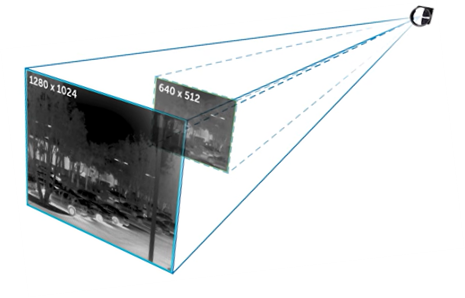
Figure 2. Illustration de la zone d’image et de la plage de détection VGA vs. SXGA
Les comparaisons représentatives des mêmes objectifs utilisant une focale de 32 mm montrent comment une configuration SXGA peut fournir un champ de vision horizontal plus large tout en augmentant la couverture relative de la scène et la plage de détection modélisée par rapport à une configuration VGA. Les valeurs du Tableau 3 illustrent les compromis relatifs au niveau du système selon des hypothèses équivalentes et ne sont pas destinées à garantir les performances dans toutes les conditions d’exploitation.
Tableau 3. Comparaison de la longueur focale du même objectif de Boson+ et Boson SX8
| Comparaison des mêmes objectifs | Boson+ | Boson SX8 |
|---|---|---|
| Distance focale | 32 mm | 32 mm |
| Champ de vision horizontal | 13,5° | 18° |
| Couverture relative de la scène | Référence | +76 % |
| PORTÉE DE DÉTECTION | ~2 350 m | ~3 300 m |
| Plage de détection relative | 1× | +40 % |
Les valeurs de la plage de détection et la couverture relative de la scène doivent être interprétées dans le contexte des hypothèses sous-jacentes, y compris la taille de la cible, le contraste de température cible-arrière-plan, la transmission atmosphérique, la transmission optique, le numéro f de l’objectif, la sensibilité du capteur, le traitement de l’image, les caractéristiques d’affichage et les critères de probabilité sélectionnés. Pour les systèmes opérationnels, les estimations DRI doivent être confirmées par une modélisation spécifique à la mission et, si possible, des tests sur le terrain.
Cette comparaison illustre l’un des avantages les plus importants de l’imagerie thermique SXGA. Les ingénieurs peuvent augmenter la couverture de la scène sans sacrifier les performances de la cible, ou ils peuvent utiliser les pixels supplémentaires pour améliorer la portée tout en conservant des champs de vision similaires.
Pour les applications ISR, de surveillance périmétrique et de contre-UAS, la possibilité d’augmenter simultanément la portée et la couverture de scène peut fournir un avantage opérationnel significatif.
Pourquoi le pas de pixel est important
L'un des développements techniques les plus importants derrière les caméras thermiques haute résolution modernes est la réduction du pas de pixel. Les dimensions du capteur sont déterminées par deux variables :
Dimensions du capteur = Pas de pixels × Nombre de pixels
Historiquement, l’augmentation de la résolution nécessitait des capteurs plus grands. Un détecteur thermique hypothétique de 1 280 × 1 024 utilisant un pas de pixel traditionnel de 12 μ m aurait environ quatre fois la surface du détecteur d’un capteur VGA et nécessiterait une optique sensiblement plus grande.
Une architecture SXGA de 8 μ m réduit la surface du détecteur d’environ 55 % par rapport à une mise en œuvre SXGA hypothétique de 12 μ m, ce qui contribue à limiter les pénalités de taille optique et mécanique qui accompagneraient autrement une résolution plus élevée.
Tableau 4. Comparaison de l’architecture des capteurs pour les détecteurs VGA 12 μ m et SXGA 8 μ m
| Architecture des capteurs | VGA 12 μ m | SXGA 8 μ m |
|---|---|---|
| Résolution | 640 × 512 | 1 280 × 1 024 |
| Distance entre pixels | 12 μm | 8 μm |
| Surface approximative du capteur | ~47 mm2 | ~84 mm2 |
Bien que le détecteur SXGA reste plus grand qu’un détecteur VGA, il est sensiblement plus petit qu’une implémentation SXGA traditionnelle de 12 μ m ne le nécessiterait. Cette réduction rend pratique l'imagerie thermique haute résolution moderne pour les plateformes soumises à des contraintes SWaP.
La résolution n’est pas le seul moteur des performances de l’imagerie thermique. La différence de température équivalente au bruit (NETD ou NEdT), le rapport signal/bruit, la transmission optique, le numéro f de l’objectif, la qualité de l’étalonnage et le traitement d’image affectent tous la sensibilité et la confiance de la détection. Des pixels plus petits peuvent améliorer l’échantillonnage spatial et permettre un IFOV plus fin, mais les concepteurs de systèmes doivent également évaluer si le détecteur, l’optique et la chaîne de traitement préservent suffisamment de contraste thermique pour la mission prévue.
L’impact sur l’optique
Le pas de pixel affecte plus que la taille du détecteur. Elle influence directement la conception optique. L’objectif doit projeter une image suffisamment grande pour couvrir le détecteur. Les détecteurs plus grands nécessitent généralement des éléments d’objectif plus grands, un matériau plus optique avec un poids d’objectif accru, qui génèrent également un volume mécanique plus important.
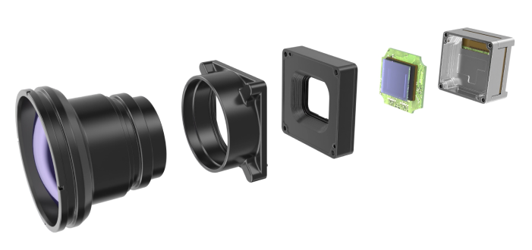
Figure 3. Composants du module de caméra thermique LWIR
Historiquement, passer de l'imagerie thermique VGA à l'imagerie thermique de classe mégapixel a souvent entraîné des optiques beaucoup plus grandes et une structure de charge utile. Des pas de pixels plus petits aident à réduire ces pénalités. En réduisant les dimensions du détecteur, la technologie 8 μ m limite la croissance dans :
- Diamètre optique
- Masse de l’objectif
- Poids de la charge utile intégrée
- Dimensions de l’emballage thermique
- Complexité mécanique
- Exigences de stabilisation
Le résultat pratique est que les caméras thermiques de haute résolution peuvent désormais être intégrées dans des drones, des appareils portables, des systèmes autonomes et des chercheurs de missiles sans nécessiter la croissance optique spectaculaire qui aurait accompagné des capteurs haute résolution de génération précédente. La figure 4 ci-dessous comprend des images à l’échelle des modules de caméra Boson+ et Boson SX8, qui sont de taille similaire lors de la comparaison des modèles de focale de 32 mm.
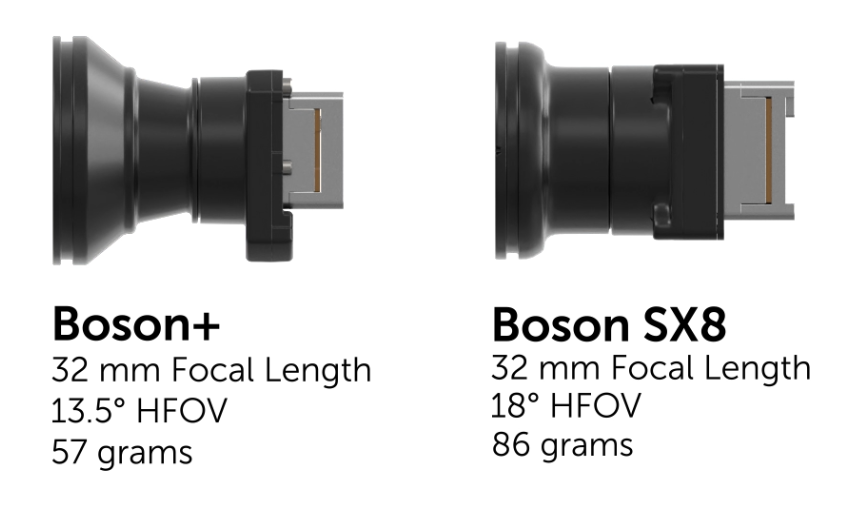
Figure 4. Comparaison de la taille et du poids des modules VGA et SXGA de 32 mm de longueur focale
Vision artificielle et systèmes autonomes
Les avantages d’une résolution plus élevée vont au-delà de l’observation humaine. Alors que les caméras thermiques servent de plus en plus d’entrées aux algorithmes d’apprentissage automatique, aux traceurs de cibles et aux systèmes autonomes, la quantité d’informations disponibles pour le logiciel devient de plus en plus importante.
La résolution SXGA native offre des avantages pour les applications d’apprentissage automatique qui ne peuvent pas être entièrement reproduites grâce à des techniques de mise à l’échelle des images ou de super-résolution. Les informations supplémentaires sur la scène peuvent améliorer :
- Détection d’objets
- Classification des objets
- Suivi multi-cibles
- Fusion de capteurs
- Navigation autonome
- Performances de l’IA en périphérie
Pour les systèmes intégrés, le passage de VGA à SXGA augmente le nombre de pixels par image d’environ 4 fois, ce qui peut affecter le traitement des signaux d’image, le codage vidéo, la bande passante de l’interface, la latence, le stockage et la charge de travail de l’IA périphérique. Les architectes système doivent évaluer si le processeur hôte, le FPGA, le GPU ou l’accélérateur d’IA peut traiter les données supplémentaires dans le budget de puissance, thermique et de latence de la plateforme. Dans de nombreuses applications de défense, l’avantage de la détection à haute résolution doit être équilibré par rapport aux ressources de calcul disponibles, à la capacité de liaison de données et aux exigences de décision en temps réel. Les nouveaux modules de caméra thermique intégrés, y compris le Boson SX8, prennent de plus en plus en charge ces flux de travail via des interfaces numériques à grande vitesse telles qu’une interface MIPI CSI-2, une interface graphique disponible et la compatibilité avec le logiciel intégré intelligent Prism™ de Teledyne FLIR OEM pour l’IA en périphérie.
Résumé technique : Faire correspondre la résolution à la mission
La transition de VGA à SXGA n’est pas seulement une question de qualité d’image. Il modifie les compromis entre le champ de vision, la résolution de la cible, la taille optique, les exigences de traitement et les performances de plage. Le choix optimal dépend des exigences de la mission et de la façon dont le système a l’intention d’utiliser les données thermiques.
Tableau 5. Des compromis au niveau du système entre l’imagerie thermique VGA et SXGA
| Considérations relatives à la conception | VGA (640 × 512) | SXGA (1280 × 1024) |
|---|---|---|
| Nombre de pixels | 327 000 pixels | 1,31 million de pixels |
| Chargement de traitement | Inférieure | ~4x plus de données d’image |
| Bande passante vidéo | Inférieure | Supérieur |
| Exigences de stockage | Inférieure | Supérieur |
| Pixels sur la cible | Référence | ~4 fois plus grand avec le même champ de vision horizontal |
| Performances DRI | Référence | Amélioration |
| Perception de l'environnement | Bon | Meilleur |
| Entrées IA / vision artificielle | Adapté à de nombreuses applications | Plus d’informations pour la détection, la classification et le suivi |
| Flexibilité de la conception optique | Plus contraint | Meilleure capacité à équilibrer le champ de vision et la résolution de la cible |
| Coût du système | Inférieure | Supérieur |
Une résolution plus élevée fournit plus d’informations, mais ces informations doivent être traitées, transmises, stockées et utilisées. La question technique n’est pas de savoir si SXGA génère plus de données, mais si l’application bénéficie de ces informations supplémentaires.
Applications recommandées pour l’imagerie thermique VGA et SXGA
Le VGA reste une excellente solution lorsque la mission ne nécessite pas de résolution cible maximale ou de capacité d’identification longue portée. Dans ces applications, le VGA fournit souvent suffisamment d’informations thermiques tout en minimisant les exigences de traitement, la bande passante, le stockage et la complexité globale du système.
La SXGA offre la plus grande valeur lorsque la résolution de la cible, la couverture de la scène ou la perception de la machine influencent directement le succès de la mission. Ces applications peuvent bénéficier d’informations spatiales supplémentaires, d’options de champ de vision plus larges et d’entrées d’apprentissage machine plus riches, à condition que le système puisse prendre en charge les exigences associées en matière de traitement, de bande passante, d’alimentation, de température et de coût.
Tableau 6. Exemples d’applications pour les caméras thermiques VGA et SXGA
| VGA (640 × 512) | SXGA (1280 × 1024) |
|---|---|
| Petites charges utiles pour drones à courte portée | Charges utiles des drones ISR longue portée |
| Visionneuses thermiques portables | Systèmes contre-UAS |
| Systèmes d’amélioration de la vision des conducteurs | Surveillance des frontières et des périmètres |
| Sécurité générale et surveillance | Surveillance persistante de larges zones |
| Systèmes de surveillance industrielle | Systèmes de protection des forces |
| Programmes OEM sensibles aux coûts | Véhicules terrestres autonomes |
| Architectures système VGA existantes | Plateformes de détection optimisées par l’IA |
| Plateformes d’inspection robotiques | Applications de suivi multi-cibles |
| Vision industrielle fixe | Systèmes de ciblage et de recherche |
Considérations NDAA et ITAR
Pour les programmes OEM de défense, gouvernementaux et internationaux, la résolution et les performances ne sont qu’une partie de la décision de conception du système. L’assurance de la chaîne d’approvisionnement, l’éligibilité à l’approvisionnement, l’exportabilité et le risque d’intégration peuvent également influencer le choix de la caméra. Les modules de caméra thermique conformes à la NDAA et sans ITAR peuvent aider à simplifier l’approvisionnement, à prendre en charge un accès élargi au programme et à réduire la complexité administrative pour les intégrateurs de systèmes américains et alliés. Pour les plateformes qui nécessitent une détection LWIR de résolution supérieure sans ajouter de contraintes de contrôle à l’exportation ou d’approvisionnement, ces considérations peuvent être un facteur significatif dans la sélection d’une architecture SXGA.
Principaux enseignements et conclusions
Le choix entre l’imagerie thermique VGA et SXGA doit être motivé par les exigences de la mission, l’architecture du système et les contraintes du programme. Le VGA reste un choix pratique lorsque le coût, le SWaP, la charge de calcul, la bande passante, la simplicité d’intégration et la compatibilité existante sont des considérations principales. La SXGA est plus convaincante lorsque la mission bénéficie d’une discrimination à plus longue portée, d’une couverture de scène plus large, d’un potentiel DRI amélioré ou de données thermiques natives plus denses pour une détection, un suivi et une perception automatisées des machines. Des pixels de 8 μ m plus petits contribuent à rendre l’imagerie thermique de haute résolution plus pratique en réduisant le détecteur et les pénalités optiques traditionnellement associées aux capteurs de plus grand format, ce qui permet de concevoir des modules de caméra thermique SXGA optimisés pour SWaP.
Pour les concepteurs de systèmes, la question clé est de savoir si l’application peut utiliser efficacement les informations supplémentaires fournies par SXGA tout en restant dans les limites de la plateforme pour l’optique, le traitement, la bande passante, l’énergie, la gestion thermique, le coût, l’approvisionnement et l’exportabilité. Lorsque ces compromis s’alignent sur la mission, SXGA offre des avantages techniques significatifs par rapport aux architectures VGA traditionnelles. Pour en savoir plus sur la nouvelle SXGA Boson SX8 optimisée SWaP, conforme à la NDAA et sans ITAR, veuillez consulter le site oem.flir.com/bosonsx8.
Articles connexes
-
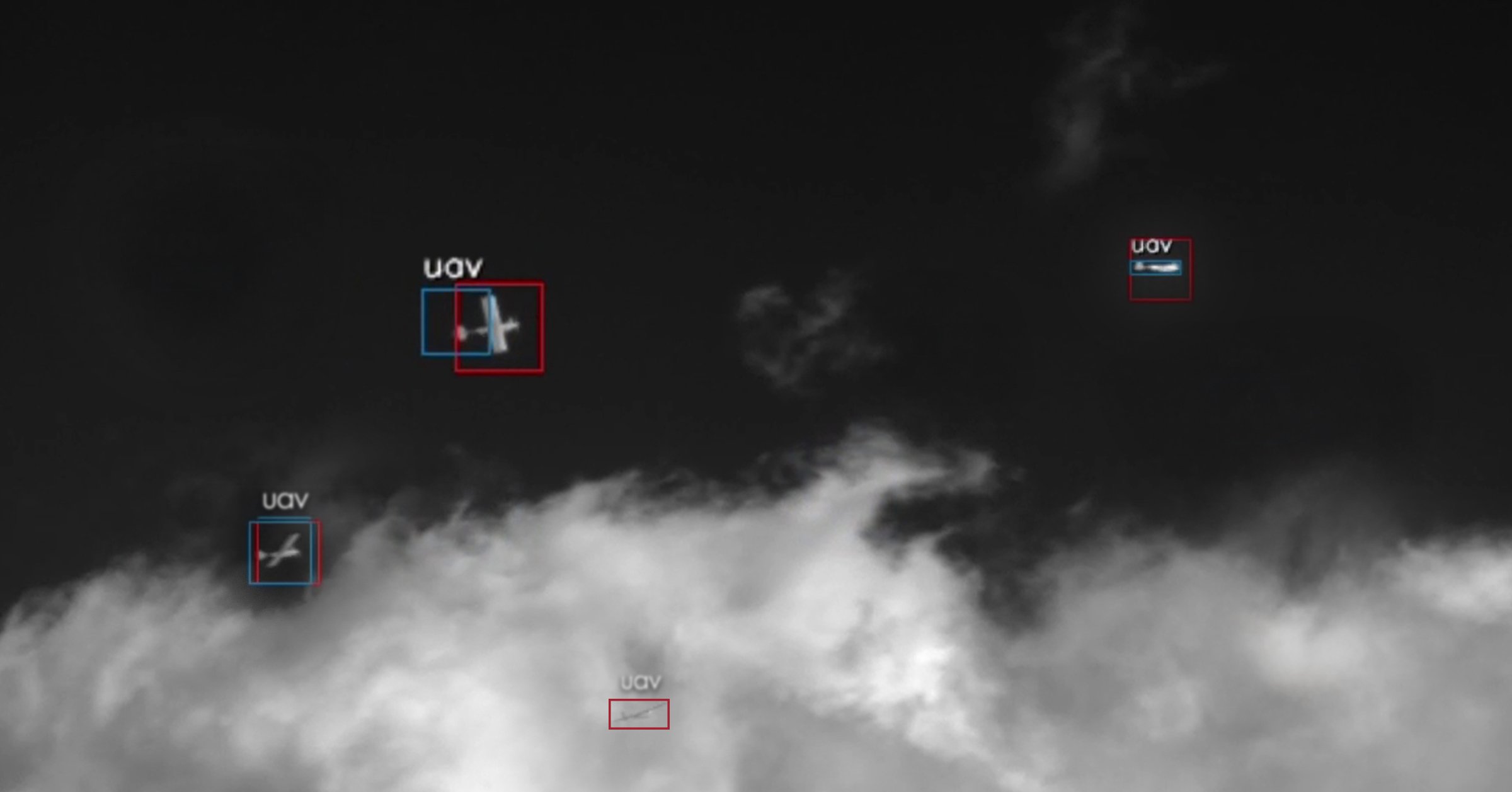 Livre blanc
Considérations relatives à la conception des capteurs infrarouges thermiques pour la défense contre les drones
En savoir plus -
 Notice d’application
Un guide sur l’intégration économique des objectifs thermiques : Ce qu’il faut savoir pour les applications de défense et de véhicules autonomes
En savoir plus -
 Livre blanc
Beyond Embedded AI: Optimizing the Thermal Perception Pipeline from Sensor Data to Edge Deployment
En savoir plus