
Thermal Camera Modules for Professional and Industrial Devices
Integrate Thermal Imaging into Your Next Professional Device
Teledyne FLIR OEM provides thermal infrared camera modules for integration into first-responder handhelds, security cameras, inspection drones and industrial monitoring devices. Choose uncooled long-wave infrared (LWIR) for compact, low-power designs or cooled mid-wave infrared (MWIR) for demanding long-range and optical gas imaging applications.

Lepton
LWIR Micro Thermal Camera Module
- 80 x 60 or 160 x 120 Resolution
- Radiometry Optional
- 50° to 160° HFoV
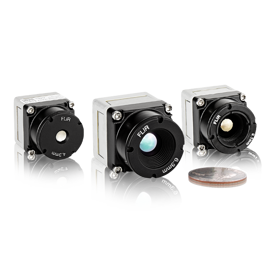
Boson+
High Performance, Uncooled, LWIR OEM Thermal Camera Module
- 320 × 256 or 640 × 512 Resolution
- ≤20 mK Thermal Sensitivity [NEdT]
- 4° to 95° HFoV

Boson+ CZ 14-75
High Performance, Uncooled, LWIR OEM Thermal Camera Module + Continuous Zoom Lens
- 640 x 512 Resolution
- ≤20 mK Thermal Sensitivity [NEdT]
- 6° to 30° HFoV
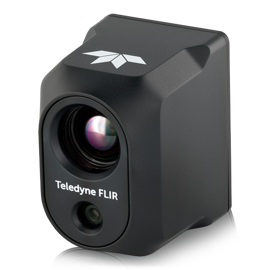
Hadron 640
High Performance, Dual Thermal and Visible OEM Camera Module
- 640 x 512 Thermal Resolution
- 64 MP Visible Camera
- Radiometry Available

Neutrino LC OGI
SWaP Optimized HOT MWIR Optical Gas Imaging Camera Core
- 640 × 512 Resolution
- ≤35 mK sensitivity [NEdT]
- Lensless

Neutrino IS Series
HOT MWIR Camera Module + Continuous Zoom Lens
- 640 × 512 or 1280 x 1024 Resolution
- Up to 27,000 Hours Cooler MTBF
- Up to 60 Hz
Thermal Imaging for Industrial Monitoring, Public Safety and Smart Devices
Applications include electrical and mechanical inspection, equipment-condition monitoring, smart-building sensors, early fire detection, public safety, perimeter security cameras, industrial inspection drones, robotics and gas-leak detection.
Match the module to the task: compact radiometric sensing for temperature monitoring, thermal-visible imaging for inspection payloads, or cooled MWIR with CZ optics for long-distance security.
Why Professional and Industrial Developers Choose Teledyne FLIR OEM
- Compact integration: Size, weight and power (SWaP)-optimized modules support battery-powered and space-constrained designs.
- Sourcing flexibility: NDAA-compliant and ITAR-free options support procurement and export planning, subject to configuration, destination and end-use requirements.
- Proven production scale: High-volume manufacturing supports the transition from prototype to production.
- Development support: Software development kits (SDKs), evaluation hardware, interface documentation and application engineering support integration. Factory-integrated CZ options simplify lens integration.
- Software and partner support: Prism software supports compatible camera and processor configurations. MyFLIR, MSX and VividIR licensing are available for eligible programs; Thermal by FLIR provides eligible partners with product-development and marketing support.
How Do You Choose a Thermal Camera Module?
Start with object size, distance and field of view. Then compare resolution, thermal sensitivity, frame rate, operating environment, power budget and host interfaces. For radiometry, specify temperature range and required accuracy. For optical gas imaging, identify the target gas and spectral band. Confirm software compatibility for the selected camera and host processor.
Compare the camera families below, then check the selected model’s datasheet for specifications, lens options and availability.
| Product Family | Thermal Technology | Relevant Applications or Requirements | Key Selection Considerations |
|---|---|---|---|
| Lepton | Uncooled LWIR | Space-, power- and cost-constrained devices: mobile products, robotics, early fire detection and data-center monitoring. |
|
| Boson, Boson+ and Boson CZ | Uncooled LWIR | Inspection drones, security, counter-UAS and equipment-condition monitoring. |
|
| Boson SX8 and Boson SX8 CZ | Uncooled LWIR | SWaP-constrained drones, counter-UAS, and security systems requiring high-resolution thermal imagery. |
|
| Hadron | Uncooled LWIR + visible | Thermal-visible inspection payloads, drones and robotic platforms. |
|
| Neutrino SWaP | Cooled MWIR | Long-distance imaging with application-specific optics for perimeter security. |
|
| Neutrino IS | Cooled MWIR with factory-integrated continuous zoom optics | Long-distance security systems requiring an integrated camera-and-CZ lens solution to optimize performance and reduce integration complexity. |
|
| Neutrino LC OGI | Cooled MWIR optical gas imaging | Handheld, drone-mounted and fixed systems for hydrocarbon leak detection at oil and gas facilities. |
|
Professional and Industrial Thermal Camera FAQs
When should industrial imaging systems use uncooled LWIR or cooled MWIR?
Choose Lepton or Boson uncooled LWIR modules for compact, low-power inspection and monitoring devices. For temperature measurement, select a radiometric configuration. Choose Neutrino cooled MWIR for demanding long-distance imaging and a dedicated OGI configuration for gas imaging. Compare complete detector-and-optics configurations against viewing object size, distance, field of view, sensitivity, power and lifecycle requirements.
Which Teledyne FLIR OEM thermal camera modules support radiometric temperature measurement?
Selected Lepton, Boson, Boson+ and Hadron configurations provide calibrated per-pixel temperature output. Radiometry means temperature measurement, not just thermal imagery. Check the selected model’s measurement range and accuracy specifications.
What is the difference between Neutrino SWaP and Neutrino IS?
Neutrino SWaP provides cooled MWIR modules for integration with application-specific optics. Neutrino IS combines a cooled MWIR module with factory-integrated continuous zoom optics to reduce optomechanical integration work.
What do NDAA-compliant and ITAR-free mean for professional and industrial OEMs?
National Defense Authorization Act (NDAA)-compliant camera options support applicable U.S. government sourcing requirements. ITAR-free means the product is not subject to the International Traffic in Arms Regulations; it does not mean unrestricted export. Other controls, including the Export Administration Regulations (EAR), may apply. Confirm the configuration, destination, end user and end use.
Which gases can Neutrino LC OGI detect?
Neutrino LC OGI detects and visualizes methane, propane, butane and other hydrocarbons using a 3.2–3.4 µm spectral band. The 640 × 512 cooled MWIR core supports handheld, drone-mounted and fixed gas-leak monitoring systems for processing facilities, refineries, pipelines, tank farms and well pads. Confirm suitability for the target gas and operating conditions.
Related Content
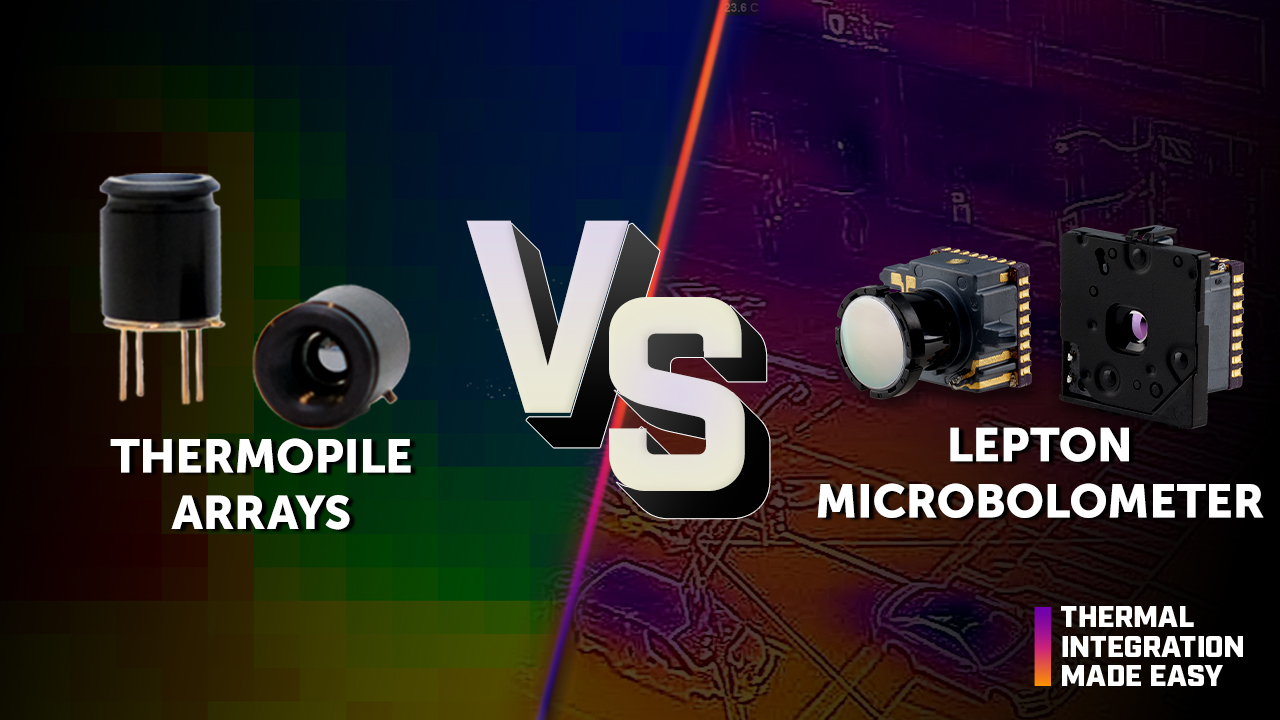
Thermopile Arrays vs. the FLIR Lepton Micro Thermal Camera Module: What’s the Difference?
Watch now

