
Imágenes térmicas VGA frente a SXGA: Qué significa una resolución más alta para el rango, la óptica y la IA
Resumen
Este artículo examina las implicaciones a nivel del sistema de pasar de la matriz gráfica de video (VGA, 640 × 512) a la matriz gráfica superextendida (SXGA, 1280 × 1024) de imágenes infrarrojas de onda larga (LWIR) para aplicaciones de detección de defensa, autónomas e integradas. Compara cómo la resolución más alta del detector afecta los píxeles en el objetivo; el campo de visión instantáneo (IFOV); el rendimiento de detección, reconocimiento e identificación (DRI); las compensaciones del campo de visión; el diseño óptico; la carga de procesamiento; y el rendimiento de la visión artificial. El objetivo es enmarcar la resolución como un elemento de un espacio comercial de ingeniería más amplio que también incluye sensibilidad, rendimiento óptico, ancho de banda, latencia, energía, gestión térmica, requisitos de adquisición, exportabilidad y necesidades de rendimiento específicas de la misión.
Introducción y antecedentes
Durante más de una década, los generadores de imágenes térmicas de resolución VGA han sido el estándar para muchas aplicaciones de defensa, industriales y sin personal porque proporcionan un equilibrio efectivo de rendimiento, costo del sistema y tamaño, peso y potencia (SWaP). A medida que los requisitos de autonomía, visión artificial y detección de largo alcance continúan expandiéndose, los arquitectos de sistemas están evaluando los beneficios de pasar a sensores térmicos de mayor resolución.
La transición de VGA a SXGA es más que una simple mejora de la calidad de imagen. Con cuatro veces el recuento de píxeles, los lectores de imágenes SXGA cambian fundamentalmente la relación entre la resolución del objetivo, el campo de visión, el diseño óptico y la percepción de la máquina. Los módulos SXGA LWIR más nuevos, como Boson® SX8 de Teledyne FLIR OEM, ilustran cómo las arquitecturas de detectores de 8 micrones (μ m) pueden aumentar la resolución mientras limitan el tamaño y las sanciones ópticas tradicionalmente asociadas con sensores térmicos de formato más grande. Estas compensaciones son especialmente importantes para los sistemas militares y aeroespaciales donde el rendimiento del sensor debe equilibrarse con el tamaño de la carga útil, el procesamiento a bordo, la capacidad de enlace de datos, la exportabilidad y los requisitos de adquisición en cumplimiento con las Regulaciones Internacionales de Tráfico de Armas (International Traffic in Arms Regulations, ITAR) y la Ley de Autorización de Defensa Nacional (National Defense Authorization Act, NDAA). Boson®+ proporciona un punto de referencia VGA útil para comparar cómo la resolución, el paso de píxeles, el campo de visión, las restricciones de integración a nivel del sistema y los requisitos del programa afectan el rendimiento del mundo real.
 |
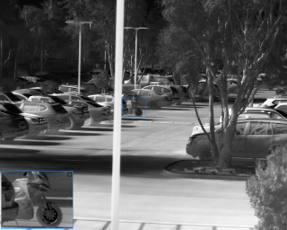 |
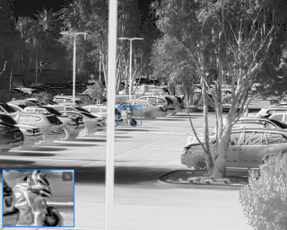
Figura 1. Ejemplo de VGA HFOV de 18° (izquierda) frente a SXGA (derecha) con imagen en imagen con zoom de 3×
Comprender la diferencia de resolución
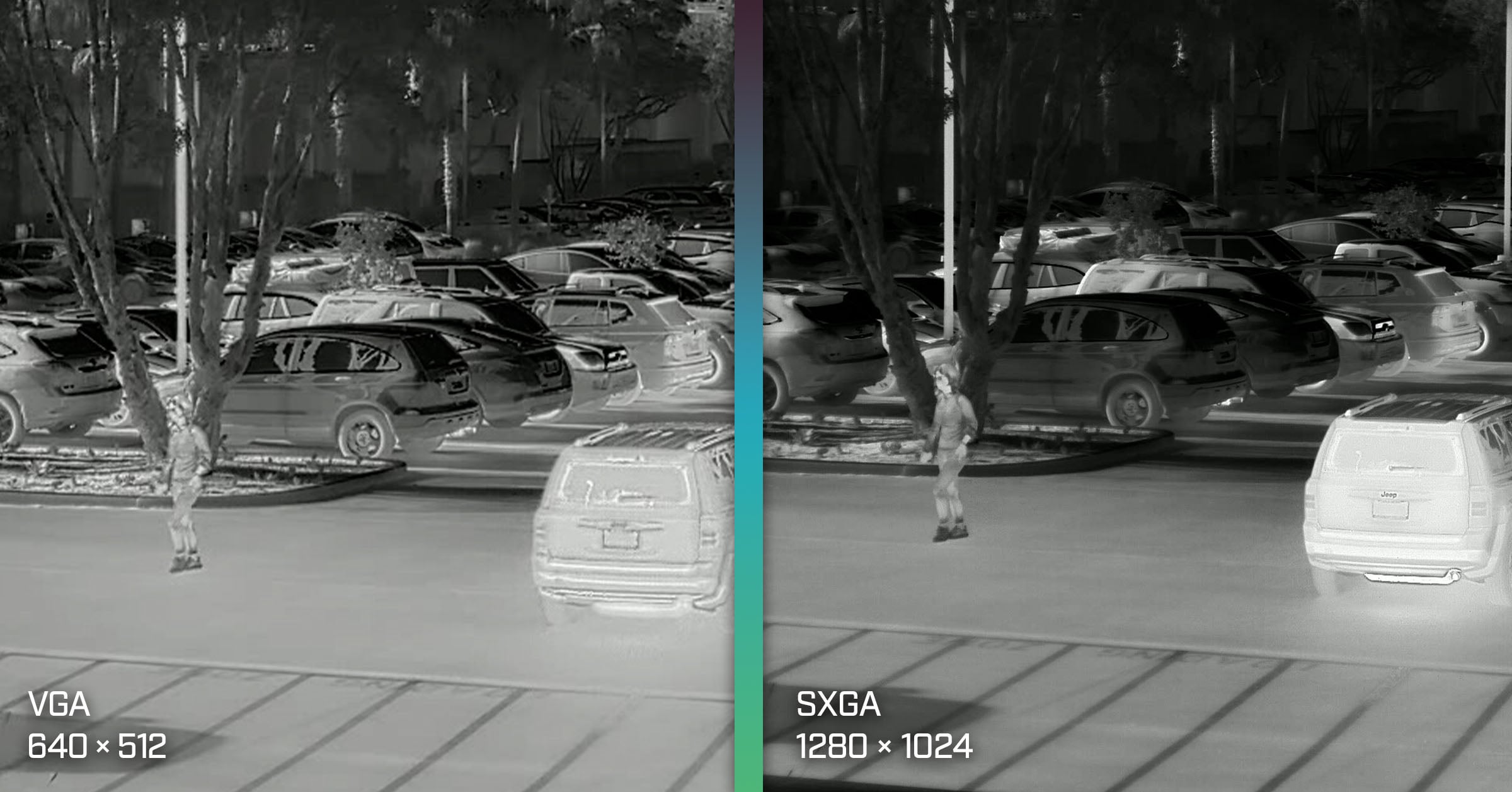
La diferencia más obvia entre VGA y SXGA es el recuento de píxeles. Un sensor SXGA captura cuatro veces más muestras térmicas por cuadro que un sensor VGA. Esos píxeles adicionales se pueden utilizar de dos maneras: aumentando el detalle del objetivo en el mismo campo de visión o aumentando el campo de visión mientras se mantiene el detalle del objetivo. La mayoría de los sistemas del mundo real utilizan una combinación de ambos.
Tabla 1. Comparación de resolución VGA y SXGA
| Parámetro | VGA | SXGA |
|---|---|---|
| Resolución (horizontal × vertical) | 640 × 512 | 1280 × 1024 |
| Total de píxeles | 327,680 | 1.310.720 |
| Recuento relativo de píxeles | 1× | 4× |
La importancia de una resolución más alta no es simplemente que la imagen parezca más nítida. Las muestras térmicas adicionales proporcionan más información a operadores humanos, rastreadores de objetivos, sistemas autónomos y algoritmos de aprendizaje automático.
Píxeles en rendimiento objetivo y DRI
La detección, el reconocimiento y la identificación (DRI) describen niveles crecientes de rendimiento de tareas en un sistema de imágenes. Detección significa determinar que un objeto está presente; reconocimiento significa clasificar el tipo de objeto, como una persona, vehículo o UAS; e identificación significa distinguir el objeto, la configuración o la amenaza específicos. El rendimiento del DRI generalmente mejora a medida que las muestras de imágenes más resueltas abarcan el objetivo, pero los umbrales exactos dependen del tamaño del objetivo, el contraste, la atmósfera, la óptica, la sensibilidad del sensor, el procesamiento de imágenes, las condiciones de visualización, el rendimiento del observador o algoritmo y los criterios de misión.
Los modelos estilo criterios de Johnson a menudo se utilizan para estimar el rendimiento de la DRI al relacionar la dificultad de la tarea objetivo con el muestreo espacial en toda la dimensión crítica del objetivo, generalmente definido como el ancho, la altura o el tamaño de la característica relevante utilizado para la tarea de detección. En términos simplificados de píxeles sobre el objetivo, la detección puede requerir solo una pequeña cantidad de muestras resueltas, el reconocimiento requiere más y la identificación requiere aún más detalles.
Estos valores deben tratarse como aproximaciones de planificación en lugar de reglas fijas. El desempeño operativo debe validarse a través de modelos específicos de la misión y, cuando sea posible, pruebas de campo.
Una métrica relacionada es un campo de visión instantáneo (IFOV), que describe la parte angular de la escena representada por un solo píxel. Un IFOV más fino significa que cada píxel cubre un área más pequeña en un rango determinado, lo que permite más pixeles en el objetivo y detalles espaciales mejorados para la detección, el reconocimiento y la identificación.
Cuando dos sensores observan la misma escena con el mismo campo de visión horizontal (HFOV), el sensor de mayor resolución coloca más píxeles a través del objetivo, lo que mejora los detalles espaciales y reduce la ambigüedad.
Tabla 2. Comparación del mismo HFOV del rendimiento relacionado con VGA y SXGA DRI
| La misma comparación de HFOV | VGA | SXGA |
|---|---|---|
| Resolución | 640 × 512 | 1280 × 1024 |
| HFOV | 18° | 18° |
| Píxeles en objetivo | Punto de referencia | ~4 veces más alto |
| IFOV | Punto de referencia | ~2 veces más fino |
| Detalle del objetivo | Punto de referencia | Mayor muestreo espacial |
| Rango DRI | Punto de referencia | Extendido |
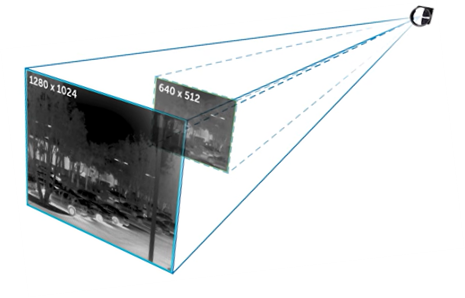
Figura 2. Ilustración del área de imagen y el rango de detección de VGA frente a SXGA
Las comparaciones representativas de la misma lente con una distancia focal de 32 mm muestran cómo una configuración SXGA puede proporcionar un HFOV más amplio mientras aumenta la cobertura relativa de la escena y el rango de detección modelado en comparación con una configuración VGA. Los valores de la Tabla 3 ilustran las compensaciones relativas a nivel del sistema bajo suposiciones equivalentes y no pretenden garantizar el rendimiento en todas las condiciones operativas.
Tabla 3. Comparación de longitud focal del mismo lente de Boson+ y Boson SX8
| Comparación de la misma lente | Boson+ | Boson SX8 |
|---|---|---|
| Longitud focal | 32 mm | 32 mm |
| HFOV | 13.5° | 18° |
| Cobertura de escena relativa | Punto de referencia | +76 % |
| Rango de detección | ~2,350 m | ~3300 m |
| Rango de detección relativo | 1× | +40 % |
Los valores del rango de detección y la cobertura relativa de la escena deben interpretarse en el contexto de las suposiciones subyacentes, incluido el tamaño del objetivo, el contraste de temperatura de objetivo a fondo, la transmisión atmosférica, la transmisión óptica, el número f de la lente, la sensibilidad del sensor, el procesamiento de imágenes, las características de la pantalla y los criterios de probabilidad seleccionados. Para los sistemas operativos, las estimaciones de DRI deben confirmarse a través de modelos específicos de la misión y, cuando sea posible, pruebas de campo.
Esta comparación ilustra uno de los beneficios más importantes de las imágenes térmicas SXGA. Los ingenieros pueden aumentar la cobertura de la escena sin sacrificar el rendimiento del objetivo, o pueden usar los píxeles adicionales para mejorar el rango mientras mantienen campos de visión similares.
Para aplicaciones ISR, vigilancia perimetral y contra UAS, la capacidad de aumentar simultáneamente el rango y la cobertura de escenas puede proporcionar una ventaja operativa significativa.
Por qué es importante el paso de píxeles
Uno de los desarrollos de ingeniería más significativos detrás de las modernas cámaras térmicas de alta resolución es la reducción del paso de píxeles. Las dimensiones del sensor se determinan mediante dos variables:
Dimensión del sensor = paso de píxeles × cantidad de píxeles
Históricamente, el aumento de la resolución requería sensores más grandes. Un detector térmico hipotético de 1280 × 1024 con un paso tradicional de 12 μ m pixel tendría aproximadamente cuatro veces el área del detector de un sensor VGA y requeriría ópticas sustancialmente más grandes.
Una arquitectura SXGA de 8 μ m reduce el área del detector en aproximadamente un 55 % en relación con una implementación hipotética de SXGA de 12 μ m, lo que ayuda a limitar las sanciones de tamaño óptico y mecánico que de otro modo acompañarían a una resolución más alta.
Tabla 4. Comparación de arquitectura de sensor para detectores VGA de 12 μ m y SXGA de 8 μ m
| Arquitectura del sensor | VGA 12 μm | SXGA 8 μ m |
|---|---|---|
| Resolución | 640 × 512 | 1280 × 1024 |
| Paso de pixel | 12 µm | 8 µm |
| Área aproximada del sensor | ~47 mm2 | ~84 mm2 |
Si bien el detector SXGA sigue siendo más grande que un detector VGA, es sustancialmente más pequeño de lo que requeriría una implementación tradicional de SXGA de 12 μm. Esta reducción es lo que hace que las imágenes térmicas modernas de alta resolución sean prácticas para plataformas restringidas por SWaP.
La resolución no es el único impulsor del rendimiento de las imágenes térmicas. La diferencia de temperatura equivalente al ruido (NETD o NEdT), la relación señal/ruido, la transmisión óptica, el número f de la lente, la calidad de calibración y el procesamiento de imágenes afectan la sensibilidad y la confianza de detección. Los píxeles más pequeños pueden mejorar el muestreo espacial y permitir un IFOV más fino, pero los diseñadores de sistemas también deben evaluar si el detector, la óptica y la cadena de procesamiento preservan suficiente contraste térmico para la misión prevista.
El impacto en la óptica
El paso de píxeles afecta más que el tamaño del detector. Influye directamente en el diseño óptico. La lente debe proyectar una imagen lo suficientemente grande como para cubrir el detector. Los detectores más grandes generalmente requieren elementos de lente más grandes, más material óptico con mayor peso de lente, que también impulsan un mayor volumen mecánico.
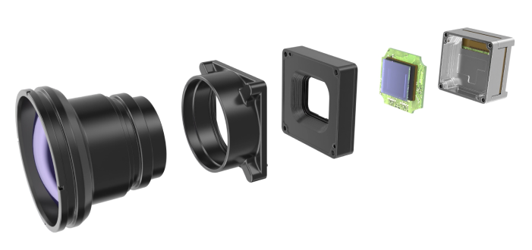
Figura 3. Componentes del módulo de cámara térmica LWIR
Históricamente, pasar de la generación de imágenes térmicas de clase VGA a la de megapíxeles a menudo daba como resultado una óptica significativamente más grande y una estructura de carga útil compatible. Los lanzamientos de píxeles más pequeños ayudan a reducir esas sanciones. Al reducir las dimensiones del detector, la tecnología de 8 μm limita el crecimiento en:
- Diámetro óptico
- Masa de lente
- Peso de carga útil integrado
- Tamaño del paquete térmico
- Complejidad mecánica
- Requisitos de estabilización
El resultado práctico es que los generadores de imágenes térmicas de mayor resolución ahora pueden integrarse en drones, dispositivos portátiles, sistemas autónomos y buscadores de misiles sin necesidad de un crecimiento óptico dramático que habría acompañado a sensores de alta resolución de generación anterior. La Figura 4 a continuación incluye imágenes a escala de los módulos de cámara Boson+ y Boson SX8, que son similares en tamaño al comparar los modelos de distancia focal de 32 mm.
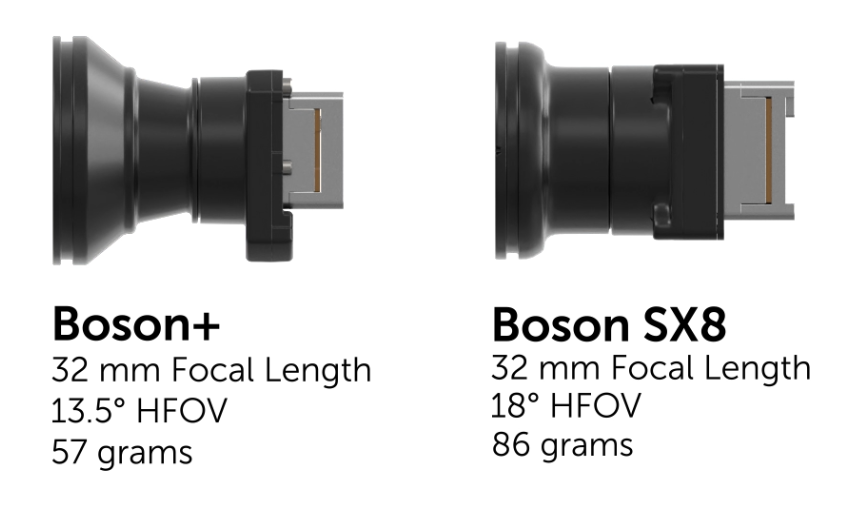
Figura 4. Comparación de tamaño y peso del módulo VGA y SXGA de longitud focal de 32 mm
Visión mecánica y sistemas autónomos
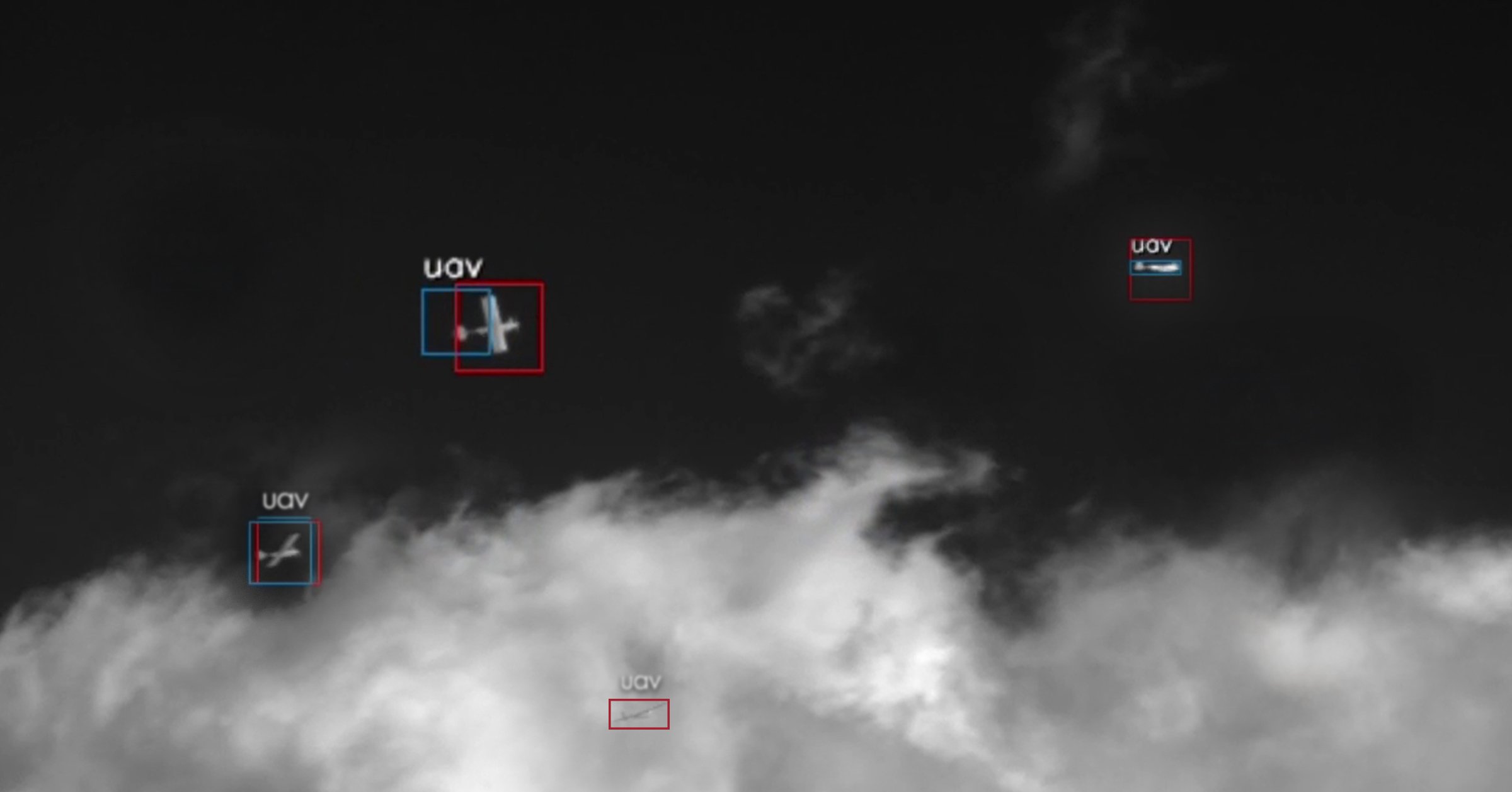
Los beneficios de una resolución más alta se extienden más allá de la observación humana. A medida que las cámaras térmicas sirven cada vez más como entradas para algoritmos de aprendizaje automático, rastreadores de objetivos y sistemas autónomos, la cantidad de información disponible para el software se vuelve cada vez más importante.
La resolución SXGA nativa proporciona ventajas para las aplicaciones de aprendizaje automático que no se pueden replicar completamente a través de técnicas de ampliación de imágenes o superresolución. La información adicional de la escena puede mejorar:
- Detección de objetos
- Clasificación de objetos
- Seguimiento multiobjetivo
- Fusión del sensor
- Navegación autónoma
- Rendimiento de IA Edge
Para los sistemas integrados, el movimiento de VGA a SXGA aumenta la cantidad de píxeles por cuadro en aproximadamente 4×, lo que puede afectar el procesamiento de señales de imagen, la codificación de video, el ancho de banda de la interfaz, la latencia, el almacenamiento y la carga de trabajo de edge-AI. Los arquitectos de sistemas deben evaluar si el procesador host, FPGA, GPU o acelerador de IA pueden procesar los datos adicionales dentro del presupuesto de potencia, térmica y latencia de la plataforma. En muchas aplicaciones de defensa, el beneficio de la detección de mayor resolución debe equilibrarse con los recursos informáticos disponibles, la capacidad de enlace de datos y los requisitos de decisión en tiempo real. Los módulos de cámara térmica integrados más nuevos, incluida la Boson SX8, admiten cada vez más estos flujos de trabajo a través de interfaces digitales de alta velocidad, como una interfaz MIPI CSI-2, una GUI disponible y compatibilidad con el software integrado inteligente Prism de Teledyne FLIR OEM para IA en el borde.
Resumen de ingeniería: Relación de la resolución con la misión
La transición de VGA a SXGA no es simplemente una cuestión de calidad de imagen. Cambia las compensaciones entre el campo de visión, la resolución de objetivos, el tamaño óptico, los requisitos de procesamiento y el rendimiento de rango. La elección óptima depende de los requisitos de la misión y de cómo el sistema pretende utilizar los datos térmicos.
Tabla 5. Desventajas a nivel del sistema entre las imágenes térmicas VGA y SXGA
| Consideración del diseño | VGA (640 × 512) | SXGA (1280 × 1024) |
|---|---|---|
| Recuento de píxeles | 327 000 píxeles | 1.31 millones de píxeles |
| Carga de procesamiento | Bajar | ~4 veces más datos de imagen |
| Ancho de banda de video | Bajar | Mayor |
| Requisitos de almacenamiento | Bajar | Mayor |
| Píxeles en el objetivo | Punto de referencia | ~4 veces mayor en el mismo HFOV |
| Rendimiento del DRI | Punto de referencia | Mejorado |
| Conocimiento de la situación | Bueno | Mejor |
| Entradas de IA/visión artificial | Adecuado para muchas aplicaciones | Más información para detección, clasificación y seguimiento |
| Flexibilidad de diseño óptico | Más restringido | Mayor capacidad para equilibrar el FOV y la resolución de objetivos |
| Costo del sistema | Bajar | Mayor |
Una resolución más alta proporciona más información, pero esa información debe procesarse, transmitirse, almacenarse y utilizarse. La pregunta de ingeniería no es si SXGA genera más datos, sino si la aplicación se beneficia de esa información adicional.
Aplicaciones recomendadas para imágenes térmicas VGA y SXGA
VGA sigue siendo una solución excelente cuando la misión no requiere una resolución máxima del objetivo o capacidad de identificación de largo alcance. En estas aplicaciones, VGA a menudo proporciona suficiente información térmica mientras minimiza los requisitos de procesamiento, el ancho de banda, el almacenamiento y la complejidad general del sistema.
SXGA proporciona el mayor valor cuando la resolución de objetivos, la cobertura de escenas o la percepción de la máquina influyen directamente en el éxito de la misión. Estas aplicaciones pueden beneficiarse de información espacial adicional, opciones de campo de visión más amplias y entradas de aprendizaje automático más ricas, siempre que el sistema pueda admitir los requisitos asociados de procesamiento, ancho de banda, energía, térmica y costos.
Tabla 6. Ejemplos de aplicaciones para cámaras térmicas VGA y SXGA
| VGA (640 × 512) | SXGA (1280 × 1024) |
|---|---|
| Cargas útiles de UAS pequeñas y de corto alcance | Cargas útiles de UAS ISR de largo alcance |
| Visores térmicos portátiles | Sistemas contra UAS |
| Sistemas de mejora de la visión del conductor | Vigilancia fronteriza y perimetral |
| Seguridad general y vigilancia | Vigilancia persistente de amplia área |
| Sistemas de monitoreo industrial | Sistemas de protección de fuerza |
| Programas OEM sensibles a los costos | Vehículos terrestres autónomos |
| Arquitecturas de sistemas VGA heredadas | Plataformas de detección habilitadas para IA |
| Plataformas de inspección robótica | Aplicaciones de seguimiento multiobjetivo |
| Visión de máquinas industriales de montaje fijo | Sistemas de focalización y búsqueda |
Consideraciones de NDAA e ITAR
Para los programas de defensa, gubernamentales e internacionales de OEM, la resolución y el rendimiento son solo una parte de la decisión de diseño del sistema. El aseguramiento de la cadena de suministro, la elegibilidad de adquisición, la exportabilidad y el riesgo de integración también pueden influir en la selección de la cámara. Los módulos de cámara térmica que cumplen con la NDAA y sin ITAR pueden ayudar a simplificar el abastecimiento, respaldar un acceso más amplio al programa y reducir la complejidad administrativa para integradores de sistemas de EE. UU. y aliados. Para plataformas que requieren detección LWIR de mayor resolución sin agregar restricciones de control de exportación o abastecimiento, estas consideraciones pueden ser un factor significativo en la selección de una arquitectura SXGA.
Conclusiones y conclusiones clave
La elección entre las imágenes térmicas VGA y SXGA debe estar impulsada por los requisitos de la misión, la arquitectura del sistema y las restricciones del programa. VGA sigue siendo una opción práctica cuando el costo, SWaP, la carga de computación, el ancho de banda, la simplicidad de integración y la compatibilidad heredada son consideraciones principales. SXGA es más convincente cuando la misión se beneficia de la discriminación de mayor alcance, una cobertura de escena más amplia, un mejor potencial DRI o datos térmicos nativos más densos para la detección automatizada, el seguimiento y la percepción de la máquina. Los píxeles más pequeños de 8 μ m ayudan a hacer que las imágenes térmicas de mayor resolución sean más prácticas al reducir el detector y las sanciones ópticas tradicionalmente asociadas con sensores de formato más grande, lo que permite diseños de módulos de cámara térmica SXGA optimizados para SWaP.
Para los diseñadores de sistemas, la pregunta clave es si la aplicación puede utilizar eficazmente la información adicional proporcionada por SXGA mientras se mantiene dentro de las restricciones de la plataforma para óptica, procesamiento, ancho de banda, energía, gestión térmica, costo, abastecimiento y exportabilidad. Cuando esas compensaciones se alinean con la misión, SXGA ofrece ventajas técnicas significativas sobre las arquitecturas VGA tradicionales. Para obtener más información sobre el nuevo SXGA Boson SX8 optimizado para SWaP, que cumple con la NDAA y no contiene ITAR, visite oem.flir.com/bosonsx8.
Artículos relacionados
-
 Documento técnico
Consideraciones sobre el diseño de sensores de infrarrojos térmicos para la defensa contra UAS
Más información -
 Nota de la aplicación
Guía sobre la integración rentable de lentes térmicos: Qué saber para aplicaciones de defensa y vehículos autónomos
Más información -
 Documento técnico
Beyond Embedded AI: Optimizing the Thermal Perception Pipeline from Sensor Data to Edge Deployment
Más información